


SCOTUS Denies Civil Forfeiture Challenge but Majority Voices Concerns About Process


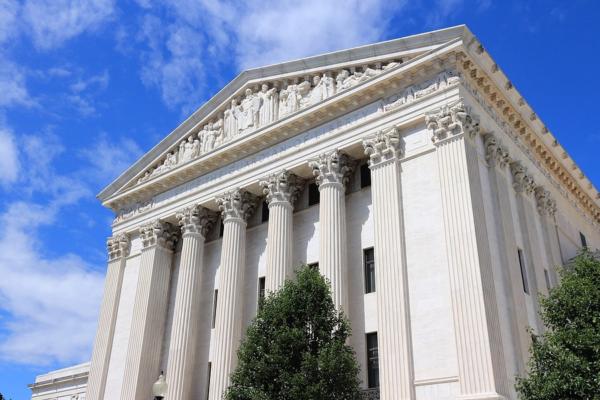
In a rare opinion addressing the rights of innocent owners of property seized under state civil forfeiture laws, the Supreme Court of the United States held that innocent owners are not constitutionally entitled to a separate preliminary hearing to seek a speedy return of their seized property. The 6-3 ruling in Culley v. Marshall, published on Thursday, May 9, 2024, found that Alabama’s civil forfeiture procedures provided sufficient due process and timeliness, even as a majority of justices voiced grave concerns about the potential for abuse of state civil forfeiture statutes, generally.
What is Civil Forfeiture?
Civil forfeiture refers to a legal process by which law enforcement officers can seize assets and property that they allege are involved in a crime or were purchased with proceeds from criminal conduct. This can include cash, cars, real estate, and other valuables.
The main idea behind civil forfeiture laws is to disrupt criminal enterprises by taking away their ill-gotten gains. However, civil forfeiture laws have been controversial because:
- Property can be seized based on mere suspicion of being connected to a crime, without the owner being charged or convicted.
- The burden of proof is on the property owner to prove their innocence and establish they acquired the assets legitimately to get them returned.
- Law enforcement agencies get to keep forfeited assets or proceeds from their sale, creating a perceived profit motive.
- Civil liberties advocates argue the laws violate due process and property rights protections.
Critics contend civil forfeiture incentivizes policing for profit over fighting crime. Defenders view it as a necessary tool against criminal organizations. There have been reform efforts but civil forfeiture remains legally permissible under federal law and laws in many states.
The Case and the Court’s Holding
The case centered on a challenge brought by Halima Tariffa Culley and Lena Sutton, whose cars were seized by Alabama law enforcement after allegedly being used to facilitate drug crimes (including on case involving the mere simple possession of marijuana) by others who had borrowed the vehicles. Alabama state law permits the seizure of a car used to “commit or facilitate” a drug crime if the car is seized “incident to an arrest” as long as the state promptly initiates a forfeiture case. In the case of Culley and Sutton, the State of Alabama filed civil forfeiture complaints against Culley’s and Sutton’s cars within 10 and 13 days of seizure, but litigation continued for months after seizure. While the cases were pending, Culley and Sutton filed class-action complaints in federal court, alleging that their due process rights were violated because their cars were retained during the forfeiture process without speedy preliminary hearings at which to demonstrate their status as “innocent owners.”
The Eleventh Circuit affirmed the dismissal of Culley and Sutton’s claims, finding that a timely forfeiture hearing provided sufficient due process and that a separate preliminary hearing was not required. In a 6-3 decision authored by Justice Brett Kavanaugh, the Court held that the 14th Amendment’s due process clause does not require courts to hold a separate preliminary hearing to allow property owners to quickly assert an innocent owner defense and seek an early return of their seized assets. The Court reasoned that prior Supreme Court precedent – United States v. $8,850 and United States v. Von Neumann – already requires a “timely post-seizure forfeiture hearing,” and that this satisfies the rights guaranteed by the United States Constitution.
Dissent Raises Alarm Over Abuses
The Court’s three liberal justices issued a scathing dissent, led by Justice Sonia Sotomayor, decrying the lack of safeguards in civil forfeiture schemes and the perverse financial incentives they create for law enforcement agencies. Sotomayor warned that these systems encourage the seizure of valuable property, even tangentially related to alleged crimes, and then subject owners to “labyrinthine processes” making it difficult and costly to recover their belongings.
Justices Neil Gorsuch and Clarence Thomas, who concurred in the judgment, echoed similar concerns in a separate opinion, questioning whether contemporary civil forfeiture practices align with the nation’s historical insistence on due process protections against government overreach. The concurring opinion highlighted the potential abuses and injustices associated with civil forfeiture, including the financial incentives for law enforcement agencies, the burden on innocent property owners, and the lack of uniform procedural safeguards.
A Call for Reform?
While the Supreme Court’s ruling cemented the constitutionality of Alabama’s procedures, the strong voices of dissent signal that a majority of the Justices may be open to re-evaluating civil forfeiture schemes in a future case. The dissent highlights disturbing data on how these systems disproportionately impact low-income and minority communities least able to navigate the costly processes to reclaim seized property. As Justice Gorsuch provocatively suggested, even conservative justices are questioning whether it is “past time” to undertake a deeper examination of whether civil forfeiture regimes have strayed too far from constitutional principles safeguarding private property rights. This decision could embolden reform efforts by state legislators concerned about civil liberties violations and seeking to implement greater due process protections.
In the meantime, innocent property owners nationwide must continue to navigate the complex patchwork of byzantine state and federal civil forfeiture laws when property is seized under the theory the property was used to facilitate crime. But a majority of the Supreme Court has put the legal community on notice about the potential injustices arising from unfettered government seizure and forfeiture powers.
Stahl Gasiorowski Criminal Defense Attorneys are experienced in defending civil and criminal forfeitures in state and federal courts. The firm attorneys defend individuals charged with various criminal offenses, including Business Fraud, Healthcare Fraud, Medicare and Medicaid Fraud, Mortgage Fraud, Tax Fraud, Securities Fraud, Wire and Mail Fraud, Theft/Embezzlement, Falsifying Documents, Money Laundering, Internet Crimes, RICO Racketeering, Domestic Violence, as well as Drug Crimes and Trafficking. To contact us call 908.301.9001 for the NJ office and 212.755.3300 for the NYC office, or email Mr. Stahl at rgs@sgdefenselaw.com, Laura K. Gasiorowski at lkg@sgdefenselaw.com or Andrew Olesnycky at ao@sgdefenselaw.com.
Our Offices

Mountainside, NJ 07092

New York, NY 10007